Hey there, language explorers and fellow culture enthusiasts! You know, in our increasingly connected world, it sometimes feels like regional differences are fading away.
With everything from social media trends to instant translation apps shaping how we communicate, you might expect languages to become more uniform, right?
It’s a fascinating current trend, watching how technology both standardizes and, paradoxically, helps preserve unique linguistic nuances across the globe.
I’ve personally been keeping an eye on this evolution, and it makes me appreciate the rich tapestry of human expression even more. We’re seeing more tools emerge that are designed to document and even revive local speech patterns, pushing back against the tide of linguistic homogenization.
This got me thinking about a country as vast and diverse as Russia. When you picture Russia, do you imagine everyone speaking the exact same way from Moscow to Vladivostok?
Given its immense size and history, you’d naturally expect a vibrant array of regional accents and dialects, much like we see in other large nations. But here’s where it gets really interesting: Russian has a surprisingly consistent standard, yet dig a little deeper, and you’ll uncover a captivating world of subtle (and sometimes not-so-subtle!) linguistic variations.
From distinct vowel sounds that mark a speaker’s origin to unique vocabulary rooted in local traditions, these regional quirks are like secret keys to understanding local identity and culture.
My own journeys have shown me just how much character these differences add to the everyday conversations you hear, making each region feel truly special.
Ready to uncover the surprising linguistic landscape of Russia? Let’s dive into the fascinating world of Russian regional dialect differences and explore what truly sets them apart!
The Melodic Whispers of the Russian North
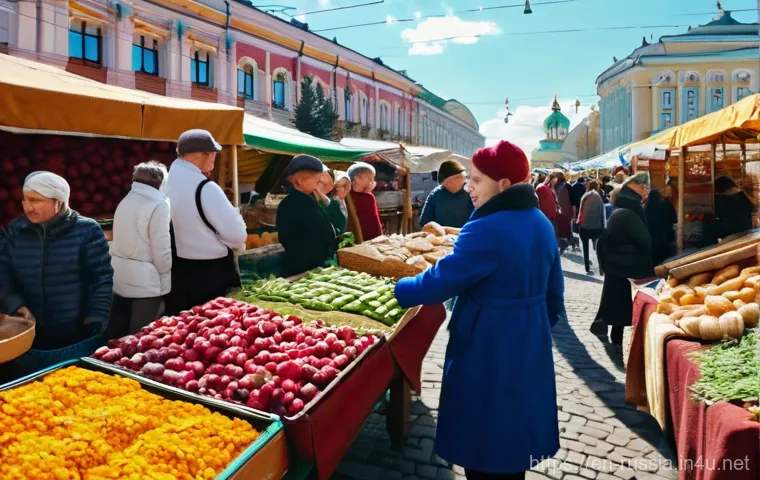
When I first started exploring Russia, I genuinely expected a more uniform linguistic landscape, especially having traveled through other vast countries.
But, oh, how wrong I was! There’s a certain charm, an almost musical quality, to the Russian spoken in its northern reaches that instantly captivates.
I distinctly remember a trip to Arkhangelsk; the way people spoke there, with those elongated ‘o’ sounds, wasn’t just an accent – it felt like a window into their soul, a living relic of ancient Slavic speech.
This region, often associated with a clearer pronunciation of unstressed ‘o’s (a phenomenon known as *okanye*), stands in stark contrast to the more common *akanye* that dominates Moscow and much of central Russia.
It’s like hearing a piece of history come alive every time someone opens their mouth. I found myself listening intently, not just to understand the words, but to appreciate the beautiful, almost poetic rhythm they carried.
It’s a gentle reminder that language isn’t just about communication; it’s a living, breathing art form, deeply rooted in the land and its people, shaping their identity in subtle yet profound ways that you just can’t get from a textbook.
Tracing Ancient Sounds: The Okanye Phenomenon
You know, the *okanye* phenomenon is truly fascinating because it’s not just a quirk; it’s a key linguistic marker. In most of standard Russian, an unstressed ‘o’ sound often morphs into an ‘a’ sound, which is called *akanye*.
Think of words like “хорошо” (kharasho) or “молоко” (malako). But up north, especially in areas like Vologda or Arkhangelsk, those ‘o’s often keep their distinct ‘o’ sound, even when unstressed.
It’s like they’ve held onto an older form of the language, preserving a sound that was once more widespread. I’ve had conversations where a local would say “холодно” (kholodno) with every ‘o’ pronounced clearly, and it was such a refreshing change from the usual “khaladna.” It truly makes you feel like you’re tapping into a deeper, more historical layer of the Russian language, and it gave me a newfound appreciation for how these subtle phonetic differences can carry so much cultural weight and lineage, making everyday interactions feel like a journey back in time.
Beyond the Vowels: Northern Vocabulary Gems
And it’s not just the vowels; the Northern regions also boast a treasure trove of unique vocabulary that you won’t hear in Moscow. I once asked for a “шапка” (shapka – hat) in a small northern village, and the old woman corrected me, gently suggesting I use “шапчонка” or “капор” – terms I hadn’t encountered in my standard Russian lessons.
It’s these little linguistic discoveries that make travel so rewarding, don’t you think? You get to peel back the layers of a language and find these hidden gems.
Many of these words are tied to traditional ways of life, like fishing, hunting, or ancient crafts, and they paint a vivid picture of the local culture.
It’s like finding a secret dictionary, filled with words that describe specific types of snow, fishing nets, or forest paths. These aren’t just synonyms; they often carry nuances and cultural connotations that standard Russian simply can’t convey, enriching the language in ways I never anticipated.
The Bold Articulation of Central and Southern Russia
Moving south from the northern territories, you immediately notice a shift in the linguistic landscape. The central regions, with Moscow as its beating heart, and extending down into the southern areas, present a very different auditory experience.
Here, the pronunciation tends to be much more energetic and, for want of a better word, “crisper” than the northern dialects. It’s where the standard Russian we often learn in textbooks truly shines, particularly with that ubiquitous *akanye* I mentioned earlier.
I remember feeling a bit disoriented when I first landed in Moscow after spending time up north. Suddenly, all those distinct ‘o’s I had grown accustomed to were gone, replaced by ‘a’s, and the pace of speech felt faster, more direct.
It’s almost like the difference between a leisurely stroll and a brisk walk – both are Russian, but they carry a distinct rhythm and feel. This region’s linguistic characteristics are often considered the foundation of the literary Russian language, giving it a certain gravitas and formality that makes it instantly recognizable to learners worldwide.
The Dominance of Akanye: A Standard Sound
The *akanye* phenomenon is, without a doubt, the defining phonetic feature of Central and Southern Russian. If you’ve ever learned Russian, you’re already familiar with it, even if you didn’t know the technical term.
It’s the reason “молоко” sounds like “malako” and “хорошо” sounds like “kharasho.” This widespread vowel reduction means that unstressed ‘o’s are pronounced more like an ‘a’, and similarly, unstressed ‘e’s and ‘ya’s often get reduced to an ‘i’ sound.
It makes the language flow with a certain efficiency, stripping away some of the heavier vowel sounds. I once tried to consciously pronounce every ‘o’ in Moscow, just for fun, and got some curious looks!
It really highlights how deeply ingrained *akanye* is in the standard pronunciation. It’s not just a rule; it’s the very fabric of how many Russians perceive their language, making it sound natural and fluent to their ears.
Southern Nuances: Softening Consonants and Cossack Influences
As you venture further south, towards regions like Rostov-on-Don or Krasnodar, you might encounter even more subtle, yet distinct, variations. While *akanye* remains prevalent, some southern dialects exhibit a tendency to soften consonants, particularly ‘g’ and ‘v’, sometimes pronouncing them almost like a ‘h’ or a softer ‘w’ sound.
I was chatting with a local in a bustling market, and their pronunciation of “говорить” (govorit’ – to speak) almost sounded like “hovorit’,” a gentle, almost breathy articulation that was incredibly charming.
This is often attributed to the historical influence of various cultures, including Ukrainian and Cossack traditions, which have left their indelible mark on the region’s speech patterns.
It’s like the language itself has absorbed the warmth and openness of the southern sun, making for a softer, more fluid conversational style. These regional inflections are a testament to how rich and permeable linguistic boundaries can be, constantly evolving through cultural exchange.
The Curious Case of Siberian Speech
Oh, Siberia! Just the name conjures images of vast, untamed wilderness, and its linguistic landscape is just as intriguing. You might expect a region so immense and geographically isolated to have developed radically different dialects, right?
Well, it’s a bit more nuanced than that. While Siberian Russian largely maintains the characteristics of standard Central Russian (yes, *akanye* is still king here!), it possesses its own unique flavor, seasoned by centuries of migration, the influence of indigenous languages, and the sheer grit required to thrive in such an environment.
My own experience traveling along the Trans-Siberian Railway showed me how the language, while understandable, subtly shifted, picking up new words and expressions that were distinctly Siberian.
It’s not about dramatic phonetic changes like in the north, but rather a robust vocabulary and an often-more direct, no-nonsense manner of speaking that perfectly reflects the local character.
Echoes of the Taiga: Unique Lexicon of Siberia
The most striking feature of Siberian Russian, in my opinion, is its rich lexicon, brimming with words that reflect the region’s unique environment and history.
You’ll hear terms related to hunting, fishing, mining, and the harsh climate that are rare or non-existent in European Russia. For instance, words for different types of snow, ice formations, or specific forest animals often have local Siberian variations.
I distinctly recall being taught the difference between “пурга” (purga – blizzard) and “метель” (metel’ – snowstorm), with locals explaining that “пурга” often refers to a much more intense, blinding blizzard characteristic of their region.
These aren’t just fancy words; they are essential for describing their everyday reality. It truly makes you feel connected to the land when you hear someone use a word that perfectly encapsulates a specific Siberian phenomenon.
It’s like the language itself has been forged in the crucible of their environment, creating a vocabulary that’s as rugged and resilient as the landscape itself.
The Ural Influence: Where East Meets West
As you move into the Ural Mountains, the unofficial border between European Russia and Siberia, you begin to hear interesting overlaps. The Ural dialects often serve as a bridge, sharing characteristics with both central Russian speech and some of the emerging Siberian patterns.
It’s a fascinating linguistic crossroads. While still largely *akanye*-dominant, you might pick up on certain pronunciations or vocabulary items that hint at both influences.
I remember a conversation with a shopkeeper in Yekaterinburg who used a word for “small forest” that was unfamiliar to me, a blend of traditional Russian and a regional term.
It’s a testament to the fact that dialects aren’t static; they are dynamic entities, constantly absorbing and reflecting the movements of people and the confluence of cultures that have passed through these strategic mountain passes over the centuries, creating a fascinating linguistic patchwork.
The Caucasus and Its Linguistic Tapestry
Now, let’s talk about the Caucasus region – a place of breathtaking mountains, vibrant cultures, and an absolutely mesmerizing linguistic diversity that extends even to Russian spoken there.
This area is unique because Russian, while widely spoken, often exists alongside numerous indigenous Caucasian languages, like Chechen, Georgian, Armenian, and many others.
This constant linguistic interaction inevitably spills over into how Russian itself is spoken. It’s less about a distinct “Caucasian Russian dialect” in the traditional sense, and more about the fascinating influence these other languages have on the rhythm, intonation, and even the vocabulary of Russian spoken by locals.
I’ve noticed a different cadence, a unique “sing-song” quality in the Russian spoken there, particularly in places like Dagestan or North Ossetia. It’s not always easy to pinpoint, but you feel it – a subtle shift in the melody of the speech that sets it apart.
Rhythm and Intonation: A Unique Musicality
What strikes me most about Russian spoken in the Caucasus is its distinctive rhythm and intonation. While the grammar and core vocabulary remain standard, the way sentences are phrased, the rise and fall of speech, often carries a different musicality.
It’s not a change in the individual sounds as much as it is a difference in the overall flow, influenced by the phonetics of the region’s indigenous languages.
I remember hearing a news report from a correspondent in Chechnya, and even though the words were perfectly standard Russian, the way they were delivered had a pronounced, almost emphatic lilt that was quite different from what I’d hear from a Moscow broadcaster.
It’s like the soul of the local languages permeates the Russian spoken there, giving it a unique sonic identity that I find incredibly captivating.
Vocabulary Exchange: A Blend of Worlds
Beyond intonation, you’ll also find some fascinating vocabulary borrowings in Caucasian Russian. While not as numerous as in some other regional dialects, specific words from local languages can find their way into everyday Russian conversation, especially when referring to local foods, customs, or geographical features.
I’ve heard Russian speakers in the region use words like “сакля” (saklya – a traditional mountain dwelling) or “чурек” (churek – a type of flatbread) quite naturally, seamlessly integrating them into their Russian sentences.
It’s a beautiful example of linguistic coexistence, where languages don’t just stand side-by-side but actively enrich each other. These loanwords are not just exotic additions; they represent shared cultural experiences and traditions, making the local Russian feel deeply authentic and tied to the unique identity of the Caucasus.
The Ever-Evolving Language of the Far East
Venturing all the way to Russia’s Far East is like stepping into another world, and the Russian spoken there reflects its unique position at the crossroads of various cultures and geographical influences.
Bordering China, Mongolia, and North Korea, and with its vast Pacific coastline, the Russian here has developed its own distinctive character. While the grammatical structure and core vocabulary remain firmly rooted in standard Russian, the isolation from European Russia, coupled with interactions with neighboring nations and a vibrant history of pioneers and settlers, has created a fascinating linguistic blend.
I’ve found that the pace of speech can sometimes be a bit slower, more deliberate, and there’s a certain resilience in the vocabulary, reflecting the pioneering spirit of the region.
Pacific Influences: A Subtle Linguistic Shift
The Far East’s proximity to East Asian countries, particularly China, has, surprisingly, not led to a massive influx of direct loanwords into spoken Russian in the same way, for example, English has borrowed from French.
Instead, the influence is often more subtle, sometimes affecting word usage or even pragmatic aspects of communication. You might find a more direct, less elaborate style of conversation, or particular expressions that have gained local currency.
I remember a discussion in Vladivostok where a local used a phrase to describe a situation that felt distinctly “of the region,” a pragmatic and somewhat understated way of conveying meaning that resonated with the local character.
It’s less about outright changes to the language, and more about how the existing language is adapted and used in a specific cultural and geographical context, giving it a unique feel that you wouldn’t necessarily encounter in Moscow or St.
Petersburg.
Words of the Wild: Taiga and Tundra Terms
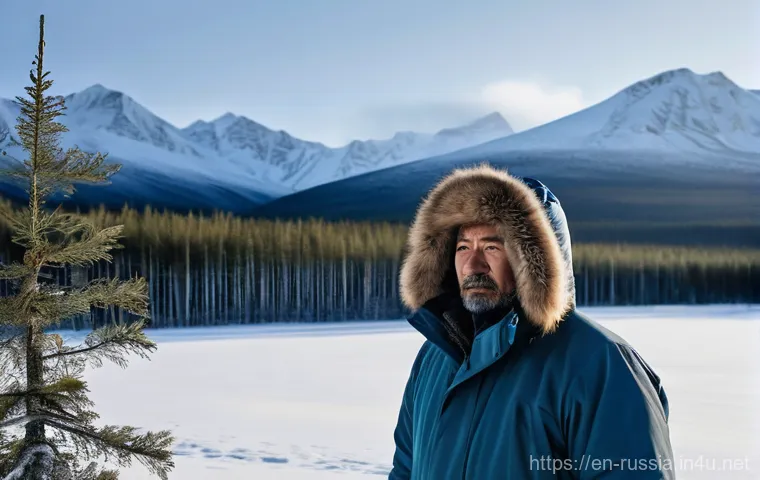
Just like Siberia, the Far East, with its expansive taiga forests and occasional tundra zones, boasts a vocabulary that speaks volumes about its environment.
Many words related to local flora, fauna, and geographical features are integral to the daily lexicon. You’ll hear specific terms for types of fish found in the Pacific, unique plants, or even particular weather phenomena that are commonplace in the region but obscure elsewhere.
It’s a survival language, in a way, born out of necessity and a deep connection to the wild landscape. When I was visiting Kamchatka, I learned local terms for different volcanic features and types of bears, words that were crucial for understanding the local way of life.
These terms aren’t just technical; they carry the weight of generations of human interaction with this powerful and often unforgiving environment, enriching the Russian language with their specific resonance.
Navigating the Linguistic Map: Essential Dialect Differences
Understanding these regional differences can truly enrich your experience of Russian, whether you’re traveling, doing business, or just passionate about languages.
It’s not about learning entirely new languages, but rather appreciating the nuances that make each region’s Russian unique. I’ve found that even a little awareness goes a long way – it helps you connect with locals on a deeper level and shows a genuine interest in their culture.
And let’s be honest, it’s just plain fun to discover these linguistic quirks! It transforms every conversation into a mini-adventure, where you’re constantly picking up on subtle clues about where someone is from and the stories their region holds.
Decoding Pronunciation: Key Regional Sound Shifts
When it comes to pronunciation, the main things to listen for are vowel reductions and consonant articulations. As we’ve discussed, *okanye* (preserving unstressed ‘o’) in the North versus *akanye* (reducing unstressed ‘o’ to ‘a’) in Central and Southern Russia is the big one.
Then there are the subtle differences in consonant sounds – sometimes a softer ‘g’ or ‘v’ in the south, or clearer, more emphatic articulation in some central regions.
It can be tricky at first, almost like learning to tune your ear to a new frequency, but with a bit of practice, you’ll start to pick up on these tell-tale signs.
I found listening to regional news broadcasts or local podcasts to be incredibly helpful for training my ear; it’s like a free immersion course right from your living room!
Words and Meanings: A Mini-Guide to Regional Vocabulary
Beyond pronunciation, vocabulary is where you’ll find some truly delightful regionalisms. While standard Russian will get you by everywhere, knowing a few local terms can really open doors.
These words often relate to everyday life, food, climate, or local traditions. It’s like a secret handshake with the locals – when you use one of their unique words, you instantly build a connection.
I always try to pick up at least a couple of local expressions whenever I travel; it’s amazing how much a simple word can convey about a place. Below, I’ve put together a quick, non-exhaustive table of some common words and how they might differ or have local equivalents, just to give you a taste of the variety.
| Standard Russian | Northern/Siberian Equivalent/Meaning | English Translation | Notes |
|---|---|---|---|
| Что? (Chto?) | Чё? (Chyo?) | What? | Colloquial, very common in many regions, especially among younger people. |
| Хорошо (Khorosho) | Ладно (Ladno) | Good / Okay | “Ладно” is more frequently used in some regions for “okay, fine.” |
| Тулуп (Tulup) | Доха (Dokha) | Sheepskin coat | “Доха” is a specific type of fur coat, often associated with Siberian winters. |
| Картошка (Kartoshka) | Бульба (Bul’ba) | Potato | More common in regions bordering Belarus and Ukraine. |
| Кофе (Kofe) | Кофеёк (Kofeyok) | Coffee (diminutive) | A more affectionate or informal way to refer to coffee in some areas. |
The Cultural Tapestry: How Dialects Reflect Identity
You know, for me, exploring Russian dialects isn’t just about linguistics; it’s about understanding the heart and soul of Russia itself. Each dialect, each regional turn of phrase, tells a story about the people, their history, their environment, and their unique way of seeing the world.
It’s a powerful reflection of local identity, connecting individuals to their ancestral lands and traditions. When someone speaks in a regional dialect, it’s not just words coming out; it’s a whole cultural narrative unfolding.
I’ve found that these linguistic nuances are often fiercely cherished, not as deviations from a standard, but as precious heirlooms that define who they are and where they come from.
It’s truly a beautiful thing to witness, and it makes you realize that language is so much more than just a tool for communication – it’s a living archive of human experience.
Preserving the Past: Dialects as Historical Records
It’s fascinating to think of dialects as living historical documents, isn’t it? Many regional variations, especially in vocabulary and older phonetic patterns, are direct links to earlier stages of the Russian language, or even to the influences of other languages and cultures that have shaped a particular area.
For instance, some northern dialects retain grammatical features that were once common in Old East Slavic, offering linguists and curious learners alike a glimpse into Russia’s distant past.
I always feel a profound sense of connection to history when I encounter these linguistic relics. It’s like finding an ancient artifact, but one that is still alive and being used every day by real people.
This preservation isn’t always conscious; it’s often simply how language evolves in a given isolated community, maintaining its distinct character over centuries, a testament to the enduring power of local tradition.
Beyond Words: The Emotional Connection to Regional Speech
Beyond the technicalities of phonetics and vocabulary, there’s a deeply emotional connection people have to their regional way of speaking. It’s a comfort, a sign of home, a shared identity.
When you hear someone speak with the same accent or use the same local expressions as you, there’s an instant bond, a sense of belonging. I’ve seen how people’s faces light up when they encounter someone who shares their regional speech patterns, especially when they are far from home.
It’s a reminder of where they come from, a connection to their family and community. This isn’t just about language; it’s about heritage, memory, and the intricate web of human relationships.
These linguistic variations are not just interesting quirks; they are fundamental aspects of cultural pride and personal identity that truly resonate with individuals, creating a powerful sense of shared experience and community.
My Personal Takeaways: Embracing the Linguistic Journey
You know, after years of exploring Russia and immersing myself in its diverse linguistic soundscapes, I’ve come to appreciate that the beauty of the Russian language isn’t just in its standard, literary form.
It’s in the rich tapestry of its regional variations, the subtle shifts, the unique words, and the distinct rhythms that paint a vivid picture of this immense and culturally rich nation.
My personal journey has been one of constant discovery, where every new region has offered a fresh perspective on how language evolves and adapts to its environment and its people.
It’s made me a much more patient listener and a more curious traveler, always eager to pick up on those little linguistic cues that reveal so much about a place and its inhabitants.
The Joy of Discovery: Learning Beyond the Textbook
For anyone learning Russian, or even just curious about it, my biggest advice is to embrace these regional differences. Don’t be afraid to listen for them, ask about them, and even try to mimic a few (respectfully, of course!).
It’s where the real joy of language learning lies, beyond the grammar rules and vocabulary lists. I remember once asking a local in Siberia about a specific type of mushroom using a regional term I’d overheard, and their delight was palpable.
It opened up a whole conversation about foraging traditions, local folklore, and even led to an impromptu mushroom-picking expedition! These are the experiences that truly stick with you, making the language come alive in ways no textbook ever could.
Connecting with Culture: A Deeper Understanding
Ultimately, engaging with Russian dialects is about forging a deeper connection with the culture. It shows respect, curiosity, and a willingness to look beyond the surface.
Each regional accent or local word is a thread in the rich tapestry of Russian identity, and by acknowledging and appreciating them, we gain a more nuanced and authentic understanding of the country and its people.
It’s an ongoing journey of discovery, and one that I wholeheartedly encourage you to embark on. You’ll find that the more you listen, the more you learn, and the richer your overall appreciation for this incredible language and its diverse speakers will become.
Concluding Thoughts
And there you have it, fellow language adventurers! My journey through the Russian linguistic landscape has been nothing short of eye-opening, transforming my understanding of this incredible country and its people. It’s truly a testament to the richness and adaptability of language, a living entity that carries the echoes of history, environment, and countless human stories. I genuinely hope my experiences have sparked your own curiosity and encouraged you to look beyond the textbook and immerse yourselves in the vibrant, diverse world of Russian dialects. Believe me, the rewards are immeasurable, not just in linguistic skill, but in a much deeper, more empathetic connection to a culture.
Useful Information to Know
1. Don’t be shy about asking locals to repeat themselves or explain regional terms. Most Russians are incredibly proud of their heritage and delighted when you show genuine interest in their unique way of speaking. It’s a fantastic icebreaker and builds instant rapport, making your interactions far more memorable and meaningful.
2. Actively listen for the tell-tale signs of *okanye* (the pronounced ‘o’ in unstressed syllables) versus *akanye* (the ‘a’ sound for unstressed ‘o’s). This is your golden ticket to quickly identifying if someone hails from the North or the Central/Southern regions. Think of it as a fun linguistic game you can play in your head!
3. While not always necessary, learning a few common local expressions or greetings for the specific region you’re visiting can work wonders. A simple “zdravstvuite” (hello) with a local twist can bring a huge smile to someone’s face and shows you’ve made an effort to connect on their terms, which is always appreciated.
4. Dive into regional content! Search for podcasts, YouTube channels, or even local news broadcasts from areas like Arkhangelsk or Siberia. It’s a fantastic, free way to train your ear to different accents and get accustomed to the natural flow and unique vocabulary that might not be covered in standard language courses. It’s like having a personal tutor in every region.
5. Embrace your mistakes as part of the learning process. You’re not aiming for perfection, but for connection. People will appreciate your effort, and often, those little “errors” lead to interesting conversations and clarification, deepening your understanding of the language and culture far more than if you’d stayed silent.
Key Takeaways
Through all my travels and linguistic explorations across Russia, one thing has become crystal clear: the Russian language is a magnificent mosaic, not a monolithic block. Each region, from the melodic whispers of the North to the robust articulation of the Central plains and the unique tapestry of the Caucasus, adds its own distinct threads to this vibrant cultural fabric. My personal experience has repeatedly shown me that truly understanding Russia means engaging with these diverse linguistic expressions. It’s about more than just vocabulary and grammar; it’s about connecting with the soul of a place, appreciating the living history embedded in every accent, and recognizing the powerful role language plays in shaping identity and community. Trust me, once you start listening, you’ll unlock a richer, more profound appreciation for Russia and its incredible people. This journey of discovery isn’t just educational; it’s genuinely transformative, offering unparalleled insights that only firsthand experience and a curious ear can provide, making every conversation an adventure.
Frequently Asked Questions (FAQ) 📖
Q: uestions
A: bout Russian Dialects
Q: How significant are Russian dialect differences, really? Do Russians from different regions struggle to understand each other?
A: This is such a fantastic question, and one I get a lot! It’s true that Russian is often considered a remarkably homogeneous language, especially when you compare it to, say, Italian or German, which boast truly wild variations that can make cross-regional understanding a real head-scratcher.
For the most part, native Russian speakers from different corners of the country can understand each other without much difficulty. Think of it less like trying to decipher a completely different language and more like recognizing a subtle accent or a unique turn of phrase that lets you know where someone might hail from.
From my own experience traveling through various parts of Russia, I’ve noticed that while the differences are certainly there, they rarely impede communication.
It’s more about delightful phonetic shifts and occasional vocabulary quirks rather than entirely different grammatical structures. The standard Russian you learn in textbooks is essentially based on the Central Russian dialect, particularly the one spoken in Moscow.
Because of historical political and cultural influence, this “Moscow norm” has spread far and wide, especially through education and media, leading to a high degree of uniformity across the vast expanse of the country.
So, while you might hear some charming local flavors, you won’t typically find yourself needing an interpreter to chat with someone from another region!
Q: What are some concrete examples of these regional differences in pronunciation or vocabulary?
A: Oh, this is where it gets really fun for us language nerds! The most prominent differences often pop up in pronunciation, particularly with vowels. The big one is what linguists call “akanie” (аканье) versus “okanie” (оканье).
In standard Russian, which, as we mentioned, is influenced by the Central and Southern dialects, unstressed ‘o’s often sound like ‘a’s. So, the word for Moscow, “Moskva,” often sounds more like “Maskva” in everyday speech.
This “akanie” is super common! But here’s the twist: if you venture up to the Northern regions of Russia, you’ll hear “okanie,” where those unstressed ‘o’s are pronounced clearly, distinctly, and sometimes even a bit longer!
Imagine hearing “Moo-skva” instead of “Maskva” – it’s a real ear-opener! Another classic example is the pronunciation of the letter ‘г’ (g). In standard Russian and the Northern dialects, it’s a hard ‘g’ sound, like in “gate.” But in the Southern dialects, it often shifts to a softer, fricative ‘g’ or even a ‘kh’ sound, similar to the ‘h’ in “hello” or the ‘ch’ in Scottish “loch.” My Russian friends from the south have told me stories about how this particular sound can instantly give away their regional roots!
And yes, there are some quirky vocabulary differences too! A classic example that often sparks friendly debates is the word for “curb.” In Moscow, you’ll typically hear “bordyur,” but head to St.
Petersburg, and they’ll more often say “porebrik.” It’s these little nuggets that, for me, truly highlight the unique character of each region!
Q: Do these dialect differences carry any social implications, or affect how people perceive each other?
A: That’s a really insightful question because language is so often tied to identity and social perception! In Russia, while dialectal differences are generally understood and accepted, there can be subtle social implications, though they’re usually not as stark as in some other cultures.
For instance, the “akanie” of Moscow and Central Russia became the literary norm, so it’s widely perceived as the “correct” or standard way of speaking.
Because of this, very strong, distinct regional dialects, especially those found in more remote rural areas, might sometimes be associated with a less educated background, often referred to by the term “prostorechiye” (просторечие), which broadly means “uneducated speech.”However, I’ve personally observed that for most urban Russians, these differences are more a source of regional pride and mild amusement than a cause for judgment.
It’s like how we might playfully tease a friend for their strong regional accent in English – it’s all in good fun! Many younger people, especially those who move to larger cities for education or work, naturally tend to gravitate towards a more standard Russian pronunciation, reducing the prominence of their native dialect over time.
So, while an older person in a small village might have a dialect that’s a bit harder for an outsider to grasp, the vast majority of daily interactions across Russia are smooth and completely comprehensible, often spiced up with just a touch of regional charm.
It makes every conversation a mini-adventure, if you ask me!